

Tired, gritty eyes at 3 p.m. usually get blamed on a long day or dry office air. Sometimes that’s the whole story. Other times the trouble sits in your tear film, and hours of screen time keep it from bouncing back. Rest helps less than you’d expect, which is often the first clue that something else is going on.
You likely have dry eyes if burning, watery eyes, blurry vision, or light sensitivity keeps returning through the day, and it’s worth seeing an optometrist once those signs stop clearing up on their own or start making ordinary tasks harder. Care for dry eye begins with finding out which part of the tear film is falling short.
What Dry Eye Really Means
Every blink spreads a thin film across the surface of your eye. That film has 3 layers: an oily outer layer that slows evaporation, a watery middle layer that rinses away debris, and an inner mucus layer that helps the rest stick to the eye.
Dry eye starts when one of those layers underperforms. Your eyes might not produce enough of the watery layer, or the oil layer might be too thin to hold it in place.
Speed matters too. Tears can evaporate between blinks, leaving the surface exposed well before the next one arrives.
Common Signs and Symptoms To Watch For
Dry eye rarely arrives with one obvious symptom. It builds through small irritations you’d probably shrug off on any given day. Here’s what tends to show up:
- A burning, stinging, or scratchy feeling, like sand sitting under your lid.
- Watery eyes, which sounds backward until you learn that reflex tearing kicks in when the surface gets too dry.
- Blurry vision that clears for a second right after you blink.
- Redness that lingers past the usual end-of-day tiredness.
- A stronger reaction to bright light and nighttime glare.
Symptoms move around, which makes dry eye easy to dismiss. You might sail through a morning and feel worn out by lunch.
Vision often blurs after a long stretch at a monitor, then settles once you look away. Wind, dry cabin air on a flight, forced-air heating, and low indoor humidity all speed up evaporation, so the difference can hit the moment you step outside or sit near a vent.
What Contributes To Dry Eyes
Screen use sits near the top of the list. Blink rate drops sharply during concentrated screen work, and fewer blinks mean fewer chances to refresh the film.
Age changes tear production too, and hormonal changes around menopause affect the glands that make the oily layer.
Some medications thin your tear supply, including antihistamines, decongestants, and certain blood pressure drugs. Long days in contact lenses and previous eye surgery can add to the load.
Who Faces Higher Risk
Dry eye can affect anyone, though a few groups run into it more often. See whether any of these describe you:
- You’re over 50, when tear production tends to slow.
- You’re a woman going through hormonal changes after menopause.
- You wear contacts for 8 or more hours most days.
- You spend most of your workday looking at a screen.
When To See an Eye Doctor
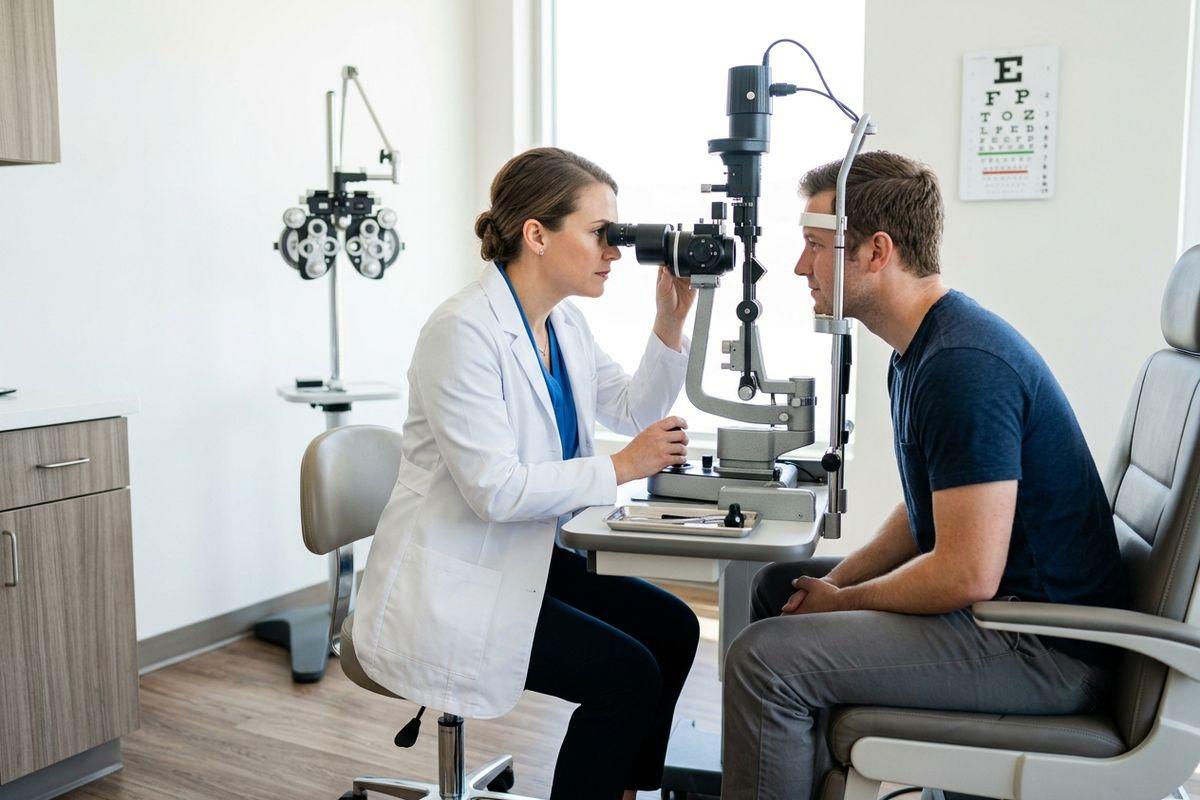
Home care handles plenty on its own. It also has a ceiling. Call an optometrist when you notice any of these:
- Symptoms hang on after rest and a few days of drops.
- Over-the-counter drops give you relief that fades within minutes.
- Reading, driving at night, or working through the afternoon feels harder than it used to.
- Your eyes feel sore or look red most mornings.
Why Early Care Helps
Small problems get less flexible over time. The oil glands lining your eyelids can clog, and glands left blocked long enough may stop producing altogether.
An early exam gives your optometrist a chance to measure how your tears behave and treat the cause instead of the symptom. That can mean fewer rough afternoons.
How Dry Eye Gets Treated
Relief usually starts with adjustments you make at home. Lubricating drops add moisture, and regular breaks let your blink rate recover. Try the 20-20-20 rule and look at something 20 feet away for 20 seconds every 20 minutes.
Warm compresses and gentle lid cleaning loosen blocked oil glands so your own tears last longer. For something more effective, ask about in-office treatments that warm and express the glands directly.
Drops do a lot of the daily work, though how you use them matters. Keep a few things in mind:
- Stick to roughly 4 uses a day with preserved drops.
- Switch to preservative-free vials if you reach for them more often than that.
- Check the label, since drops made to reduce redness work differently than lubricating drops.
- Save thicker ointments for bedtime, because they blur vision for a while after you apply them.
Get Ahead of the Next Dry Afternoon
Dry eye doesn’t have to set the tone for your day. Bring your symptoms to Joshua Powell MD, where the team can measure what your tears are actually doing and walk you through your options in plain language.
Book an appointment and get back to a workday your eyes can keep up with.