
If your eyes begin to sting by mid-afternoon, drops can help for a few minutes. What happens if the gritty, tired feeling of dry eye comes back? If that sounds familiar, your optometrist may point you toward IPL.
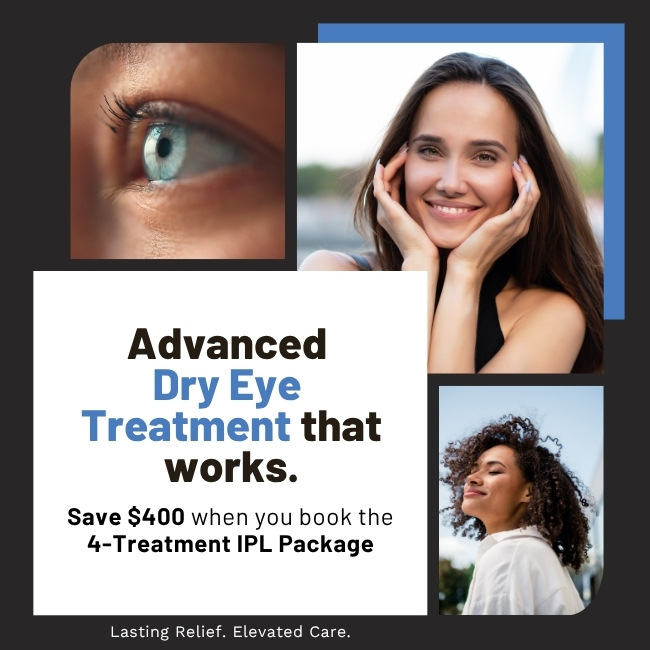
IPL stands for intense pulsed light. It’s a non-invasive way to care for dry eye that uses gentle bursts of light on the skin around your eyes. The goal is to reach the tiny oil glands in your eyelids that often get clogged. When drops and warm compresses no longer provide real relief, IPL offers another path.
IPL can be a good fit for you if your dry eye comes from blocked oil glands and simple at-home care hasn’t brought lasting comfort.
How IPL Works for Dry Eye
Small glands along your eyelids, called meibomian glands, release a thin layer of oil every time you blink. That oil sits on top of your tears and keeps them from drying up too fast. When these glands get clogged, the oil can’t flow. Your tears dry up fast, leaving your eyes feeling tired and worn out by the afternoon.
Intense Pulsed Light therapy sends gentle pulses to the area around your eyes. These pulses of light do a few things at once:
- They warm the eyelids and help loosen the thick, stuck oil inside the glands.
- They calm the redness and irritation around your eyelids.
- They help the glands return to a steady, natural oil flow.
What to Expect During Your Session
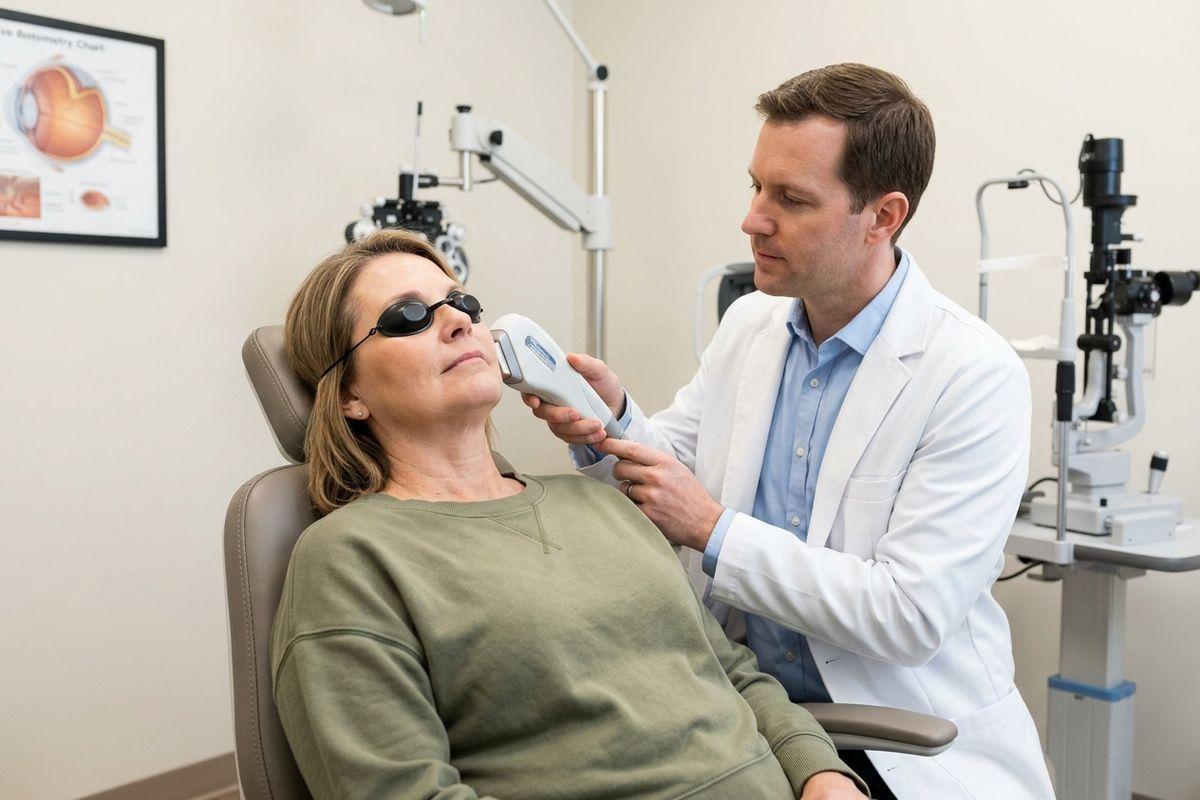
The visit moves quickly and follows a highly efficient process. Our optometrists will perform a brief eye exam before placing protective shields over your eyes. We then apply a cooling gel on the skin near your eyelids before administering the light pulses for about 10 to 15 minutes.
After Your Visit
The good news is you won’t need to plan a day off for recovery. Most people just notice a little mild redness that fades within a few hours.
Go right ahead and head back to work, run errands, or hit the gym. Many people see improvement after a single session, but it’s important to plan for several sessions spaced a few weeks apart to maintain that steady comfort.
Signs IPL Might Be Right for You

Are You a Good Candidate?
IPL tends to help people whose dryness directly relates to oil gland trouble. You might be a great match if you recognize these signs:
- Your dry eye sticks around and gets in the way of reading, screen time, or driving.
- Traditional drops and warm compresses give you little lasting relief.
- An optometrist has officially linked your symptoms to blocked meibomian glands.
When to Consider Other Options
This treatment isn’t the right choice for absolutely everyone, and that’s okay. Let our team know your full medical history so we can guide you effectively. We may map out a different plan if you fall into any of these categories:
- You’re pregnant or nursing.
- You’ve had recent eye surgery or an active eye infection.
- You have a skin tone that requires highly adjusted settings.
What Results Look Like
Many patients notice a difference after just 1 or 2 sessions. Your eyes may feel less gritty, and the burning may ease up as the day progresses.
Comfort tends to build with each visit. Occasional upkeep sessions can help you maintain that relief over time.
Costs and Downsides to Know
Before making any decision regarding your health, it’s important to consider all factors. A few practical details will help you prepare for your visits. Insurance often doesn’t cover this treatment, so ask us about pricing upfront.
Since the process takes multiple visits, understand that the total cost adds up over the series. However, it works wonderfully alongside other dry eye therapies as part of a larger plan for your ocular health.
Take Control of Your Dry Eye Symptoms Today
Daily discomfort doesn’t have to dictate how you spend your time. Book a consultation to review your symptoms, assess your oil glands, and determine whether IPL therapy fits your needs.
Reach out to the team at Joshua Powell MD today and take the next step toward more comfortable eyes.